



War Thunder is often seen as a hybrid between arcade excitement and hardcore simulation. Players fly planes at supersonic speeds, dive bomb, or maneuver tanks across battlefields in intense matches. However, beneath this thrilling surface lies one of the most intricate and precise damage systems in any modern combat game: the armor and ballistics simulation.
Unlike other vehicle combat games, War Thunder attempts to simulate real-world penetration, ricochet, projectile velocity, and armor effectiveness across hundreds of vehicles spanning decades of military history. Understanding these hidden mechanics is essential for survival, strategy, and maximizing damage.
This article explores the armor and ballistic system in detail, focusing on tanks, shell types, armor angles, projectile velocity, shell normalization, and critical module damage. By analyzing these systems step by step, players can gain insight into why shots succeed or fail and how to manipulate physics and mechanics to gain a battlefield advantage.
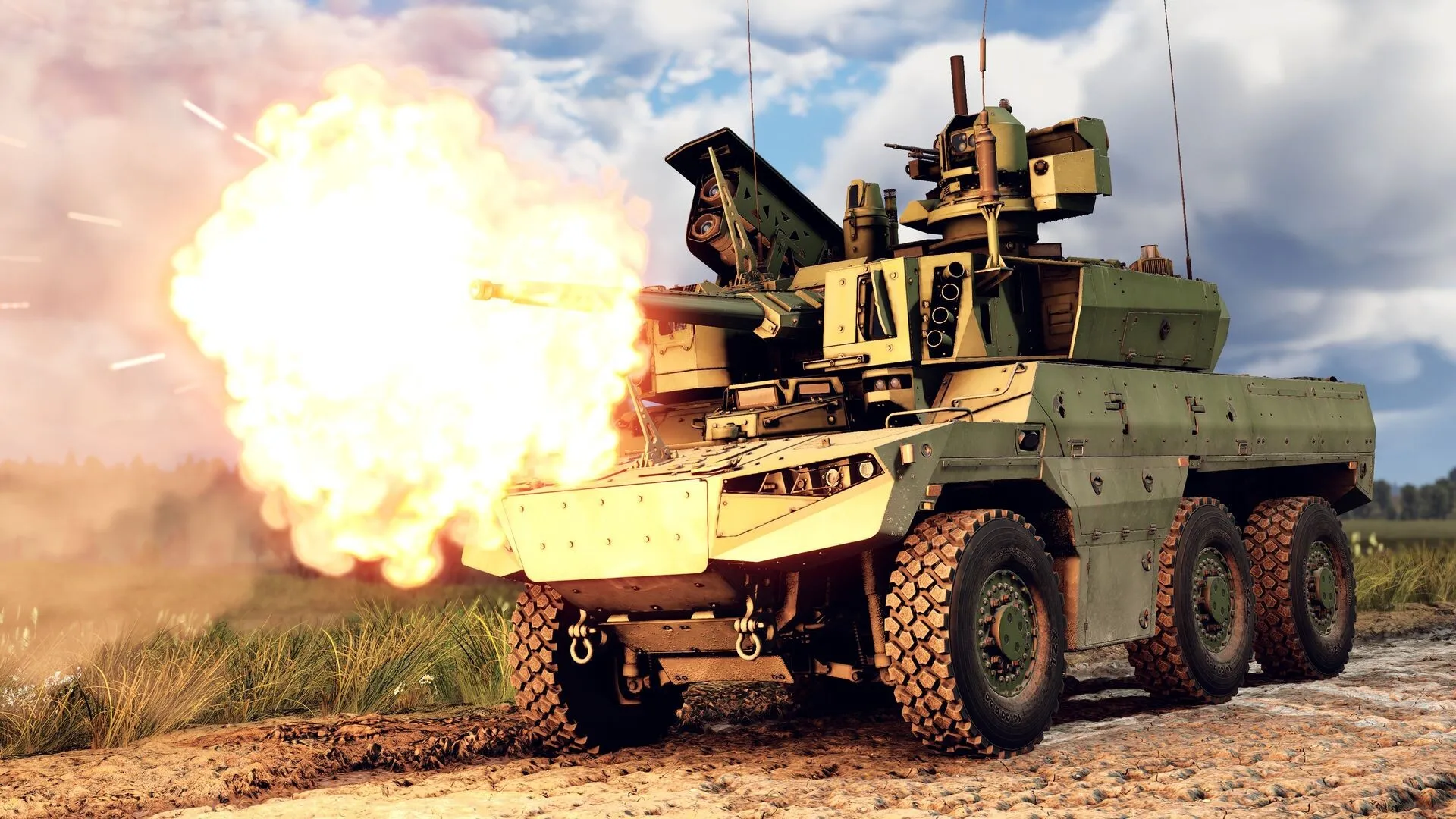
The Core of Armor Mechanics: Thickness, Slope, and Material
Each vehicle in War Thunder features detailed armor modeling based on real-world specifications. Armor is defined not just by its thickness but by composition, sloping, and layering.
Sloped armor increases effective thickness: a 100 mm plate angled at 60 degrees does not act as 100 mm—it effectively behaves as roughly 200 mm due to projectile deflection. Armor can be homogeneous or composite, affecting how different shell types interact.
Tanks like the Soviet T-34 exploit sloped armor to maximize survival against contemporary weapons, while German Tiger tanks rely on thick, vertical armor to absorb hits. Understanding the interplay of armor type and slope is key to predicting penetration outcomes.
Shell Types and Their Interactions with Armor
War Thunder models three primary shell types: AP (Armor Piercing), APCR (Armor Piercing Composite Rigid), and HEAT (High-Explosive Anti-Tank), with additional variants like HE and HESH. Each has unique penetration mechanics.
AP shells rely on raw penetration and are heavily affected by slope. A shell may fail to penetrate thickly angled armor even if its raw penetration value is higher than the nominal thickness. APCR shells bypass this limitation partially due to increased velocity and improved projectile design. HEAT shells ignore slope but may lose efficiency on spaced or composite armor. HE shells detonate on impact, bypassing thickness but rarely achieving significant penetration against heavy tanks.
Selecting the correct shell type depending on target armor is fundamental to success, and misjudging armor or shell type often results in wasted shots or ricochets.
Ricochet Mechanics: The Art of Avoiding and Inducing Bounces
Ricochets occur when a shell strikes armor at an angle exceeding its critical ricochet threshold. The system considers shell type, caliber, impact velocity, and armor angle.
Effective angling can deflect incoming AP shells, making even lightly armored vehicles more resilient. Conversely, skilled players can intentionally aim at armor at angles that maximize penetration chances. Larger caliber shells are less prone to bounce, while HEAT rounds are slope-independent.
Ricochet mechanics encourage dynamic movement and tactical positioning. Misjudging angles is a common cause of “unexpected bounces,” which are often mistaken for random events.
Shell Velocity and Range: The Physics Behind Penetration
War Thunder calculates penetration based on velocity at impact rather than muzzle velocity alone. Shells lose energy over distance, reducing penetration capacity at long ranges.
APCR shells, with higher initial velocity and less mass, maintain penetration over greater distances, while traditional AP rounds drop off more significantly. This introduces long-range decision-making: players must consider distance, shell type, and enemy armor slope when engaging at range.
High-speed projectiles also increase ricochet risk on sloped armor, further complicating calculations. Understanding velocity decay is essential for planning long-range shots and anticipating engagement outcomes.
Armor Normalization: How Shells Correct for Angle
Normalization is a subtle yet crucial factor. When an AP shell hits armor, it may slightly adjust its trajectory to reduce the effective impact angle. This increases the likelihood of penetration against moderate slopes.
Higher caliber shells normalize more effectively, allowing them to penetrate angled targets more reliably. Smaller caliber weapons normalize less, making it harder to penetrate heavily sloped tanks.
This mechanic explains why small-caliber shells sometimes fail against moderately angled armor even when penetration charts suggest they should succeed. Mastery involves choosing the right ammunition and shot placement based on armor slope.
Weak Spots and Critical Module Targeting
Every tank in War Thunder has weak zones: lower glacis, turret cupola, gun mantlet, engine deck, fuel tanks, and ammunition storage. Hitting these areas maximizes damage efficiency.
Critical module targeting can:
- Disable mobility by damaging the engine or tracks
- Reduce firing effectiveness by destroying turrets or gun breeches
- Trigger catastrophic ammo rack explosions, often resulting in instant kills
Knowledge of enemy vehicles’ weak spots allows players to bypass heavy armor by targeting key vulnerabilities. Maps with choke points and terrain features enhance opportunities for precision targeting.
Angling Techniques: Hull-Down and Side-Scraping
Angling vehicles effectively is essential for survival. Techniques like hull-down, where only the turret is exposed, and side-scraping, where angled armor maximizes ricochets, are core defensive strategies.
- Hull-down positions minimize the exposed frontal armor, making shots from enemies less effective.
- Side-scraping allows tanks to bounce shots while maintaining offensive capabilities.
Advanced players combine these techniques dynamically, adjusting angles and using terrain to mitigate penetration while forcing enemies to overexpose themselves.
Multi-Layer Armor and Spaced Armor Mechanics
Many modern and post-WWII tanks incorporate multi-layer or spaced armor, which interacts differently with shell types. HEAT rounds can be deflected or lose effectiveness on spaced armor, while APCR rounds penetrate more reliably.
Multi-layered armor increases fuse arming distance for AP shells, reducing the likelihood of penetration on thin outer plates if the shell fails to arm correctly. This mechanic explains why some shells seem ineffective against seemingly exposed targets, emphasizing the importance of knowledge and shot selection.
Combined Arms Awareness: Integrating Armor Mechanics with Battlefield Strategy
Mastery of armor mechanics is only part of the equation. Positioning, map control, and teamwork magnify effectiveness. Knowing where to engage, when to retreat, and which targets to prioritize is informed by an understanding of armor interactions.
Examples:
- Supporting allied tanks to create crossfires
- Controlling choke points to maximize angling advantages
- Flanking slower, heavily armored tanks to target weak spots
The combination of mechanical mastery and tactical awareness separates casual players from competitive veterans. Proper application of armor knowledge can dominate engagements, regardless of raw firepower.
Conclusion
The armor and ballistics system in War Thunder is one of the deepest and most realistic in any multiplayer combat game. Angles, shell types, penetration mechanics, ricochets, normalization, and critical modules all interact to create a complex web of cause and effect.
Players who understand these mechanics gain a substantial advantage: their shots land more reliably, their tanks survive longer, and their decisions on the battlefield are informed rather than reactive. Mastering War Thunder is less about raw reflexes and more about interpreting physics, anticipating enemy behavior, and exploiting the nuances of armor.
Understanding armor is not optional—it is the foundation of success in every match, turning every battle into a test of knowledge, skill, and strategy.